







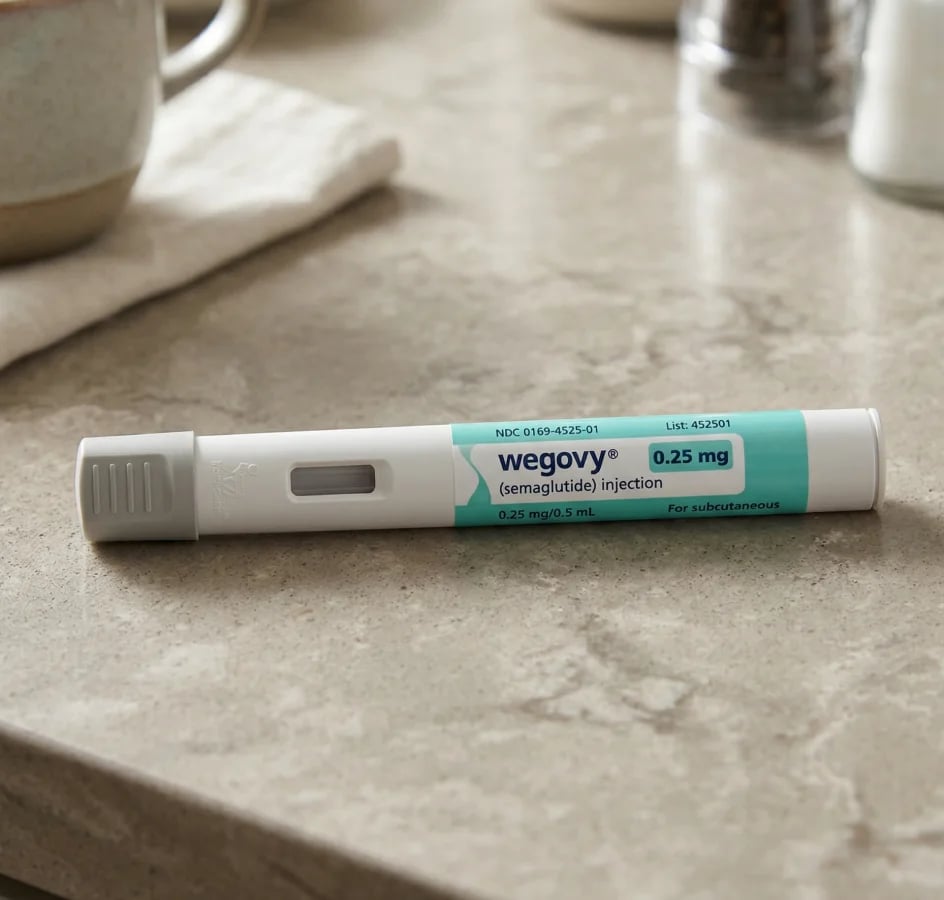
What is Wegovy?
Wegovy is a once-weekly injectable medication used for the treatment of obesity and weight-related health conditions. In practical terms, Wegovy reduces appetite, increases satiety, and helps patients sustain a calorie deficit without constant hunger — a major barrier in long-term weight management [1].
Wegovy is based on semaglutide, a GLP-1 receptor agonist originally developed for type 2 diabetes. Its effectiveness for weight loss was established through the STEP clinical trial programme, with key results showing average weight reductions of 14.9% over 68 weeks when combined with healthy lifestyle changes [1].
How does Wegovy work?
Semaglutide is a GLP-1 receptor agonist that mimics the action of Glucagon-like peptide-1 (GLP-1), a natural hormone released by L-cells in the small intestine after food intake. Semaglutide has 94% structural homology with native human GLP-1, helping to regulate blood sugar by increasing insulin release and reducing glucagon secretion from the pancreas - both in a glucose-dependent manner - leading to lower blood glucose levels [2].
The clinical effects of semaglutide include [2,3]:
- Central appetite regulation: Acts on the hypothalamus to reduce hunger signals
- Delayed gastric emptying: Slows how quickly food leaves the stomach
- Improved glycaemic control: Enhances insulin secretion and reduces glucagon release
- Reduced reward-driven eating: Alters brain pathways linked to cravings
A clinical trial demonstrated that semaglutide at a 2.4 mg dose led to significantly greater weight reduction than placebo in 68 weeks. The semaglutide group had an average 15.3 kg reduction from their starting body weight to week 68 compared with 2.6 kg weight loss in the placebo group [1]. Wegovy may also reduce the risk of weight-related medical conditions, including major cardiovascular events (heart attack, cardiovascular disease/heart disease, stroke).
Semaglutide’s long half-life of approximately 1 week also allows for convenient once-per-week dosing — a major advantage over earlier GLP-1 therapies, helping to improve patient quality of life and patient compliance [2].
Is Wegovy a GLP-1 weight loss injection?
Yes. Wegovy is an injectable weight loss pen specifically developed and licensed for weight management. Its active ingredient, semaglutide, belongs to a class of medications that replicate the effects of glucagon-like peptide-1 (GLP-1), a natural hormone released in the gut in response to food intake [2].
What distinguishes Wegovy from earlier approaches to weight management is that it does not act as a stimulant or appetite suppressant in the traditional sense. Instead, it works through a physiological feedback system that influences both the brain and the gastrointestinal tract. In the brain, GLP-1 receptor activation reduces activity in areas associated with reward-driven eating and hunger perception. In the gut, it slows gastric emptying, which prolongs the sensation of fullness after meals, and helps reduce the frequency and size of food intake so individuals consume fewer calories [1, 2].
From a clinical standpoint, Wegovy’s higher therapeutic dose (up to 2.4 mg) and weekly injection differentiate it from earlier GLP-1 treatments, such as Saxenda, which require daily injections [6].
By directly targeting GLP-1 pathways, Wegovy helps to counteract the biological adaptations that typically make sustained weight loss difficult. It may also reduce the risk of major adverse cardiovascular events. This is why many clinical teams now classify it as a foundational GLP-1 treatment for weight loss rather than a short-term intervention [7].
Manufacturer: Novo Nordisk
Wegovy is produced by Novo Nordisk, a global pharmaceutical company widely recognised as a leader in the treatment of diabetes, obesity, and other chronic metabolic conditions. The company has spent decades specialising in hormone-based therapies, particularly insulin and GLP-1 receptor agonists. The development of Wegovy builds on Novo Nordisk’s extensive research into incretin hormones and appetite regulation.
Prior to Wegovy, the company introduced several important GLP-1 therapies, including [4]:
- Ozempic: Developed for the treatment of type 2 diabetes
- Saxenda: An earlier weight loss injection requiring daily dosing
This therapeutic class has evolved from short-acting daily injections to long-acting, high-efficacy weekly treatments like Wegovy. Wegovy offers greater efficacy and the convenience of once-weekly administration compared to earlier weight management treatments [2].
How does Wegovy help to lose weight?
Wegovy targets the biological systems that regulate appetite, satiety, and energy intake. Its active ingredient - semaglutide - mimics the natural GLP-1 hormone involved in appetite control and metabolic regulation. This leads to a reduction in hunger signals in the brain, slower gastric emptying (meaning food stays in the stomach for longer), and improved blood sugar control [2].
Together, these effects help individuals change their eating habits, helping them feel full sooner, stay full for longer, and experience fewer cravings — particularly for high-calorie foods. The result is a reduction in daily calorie intake without the constant effort typically needed for diet and exercise modifications alone.
Wegovy (semaglutide) mimics GLP-1, a hormone involved in appetite control:
- Reduces food cravings and hunger
- Slows digestion to prolong fullness
- Supports better blood sugar regulation
- Helps reduce daily calorie intake
With lifestyle changes, Wegovy weight loss results are typically 10–15% of initial weight, sometimes higher — especially at the 2.4 mg dose [1].
Key facts about Wegovy
|
Active ingredient |
Semaglutide |
|
Medicine type |
GLP-1 receptor agonist |
|
Form |
Pre-filled injection pen |
|
Administration |
Once-weekly subcutaneous injection |
|
Use |
Supports adults on a weight loss journey alongside a calorie-controlled diet and increased physical activity |
|
Starting dose |
0.25 mg once weekly |
|
Maintenance dose |
Up to 2.4 mg once weekly (gradually increased) |
|
Onset of effects |
Gradual, typically over several weeks |
|
Prescription status (UK) |
Prescription-only medicine (POM) |
|
Manufacturer |
Novo Nordisk |
Dose of Wegovy: How to handle?
Wegovy dosing follows a structured escalation plan designed to improve tolerability while allowing the body to gradually adapt to increasing levels of semaglutide.
This approach is clinically important because most of the early side effects associated with GLP-1 therapy - such as nausea, reduced appetite, and gastrointestinal discomfort - are dose-dependent and tend to be more extreme when treatment is initiated too aggressively. For this reason, patients are not started on the therapeutic maintenance dose immediately.
Clinicians begin with a low introductory dose and increase it incrementally over several weeks until the target dose is reached. This titration strategy is a key part of ensuring long-term adherence and reducing early discontinuation, which is one of the most common challenges in obesity treatment [7].
Weekly Wegovy dose escalation plan
The Wegovy dosage schedule is deliberately structured as a gradual escalation plan, rather than starting at a therapeutic dose. By increasing the dose every four weeks, clinicians allow the body to adapt to the medication while maintaining tolerability and improving long-term adherence.
In practice, patients typically begin with a starting dose of 0.25 mg weekly for the first four weeks, followed by gradual increases through 0.5 mg, 1.0 mg, and 1.7 mg at four-week intervals, before reaching the recommended dose of 2.4 mg weekly from week 17 onwards [7].
Dose escalation should always be individualised based on tolerability, meaning some patients may remain on a starting dose for longer if side effects occur or if weight reduction is already being achieved [8].
The dosage of Wegovy is increased gradually to minimise side effects:
|
Week |
Dose |
|---|---|
|
1-4 |
0.25 mg once weekly |
|
5-8 |
0.5 mg once weekly |
|
9-12 |
1.0 mg once weekly |
|
13-16 |
1.7 mg once weekly |
|
From week 17 |
2.4 mg once weekly |
🛈 Do not increase more quickly than prescribed.
🛈 Take Wegovy once weekly on the same day each week.
Maintenance dose (2.4 mg)
The maintenance dose of Wegovy is 2.4 mg once weekly, which is the target dose used in major clinical trials evaluating long-term weight management outcomes. At this level, the medication exerts its full therapeutic effect on appetite regulation and energy intake.
However, treatment should be tailored to the individual. Clinical practice does not always require every patient to reach or remain on the maximum dose. Treatment is based on both efficacy and tolerability. Some patients achieve clinically meaningful weight reduction with less than 2.4mg weekly and may experience fewer gastrointestinal side effects such as nausea or early satiety. In these cases, remaining at a lower dose can be a valid and evidence-aligned approach, especially if weight loss goals are being met and the patient is satisfied with progress [8].
What happens if you miss a dose
If you miss a Wegovy dose, the recommendations depend on how much time there is until your next scheduled injection.
Here are the guidelines [9]:
- More than 2 days away: If your next dose is more than 48 hours away, take the missed dose as soon as you remember.
- Less than 2 days away: If your next dose is due within 48 hours, skip the missed dose instead of taking a double dose and continue with your usual schedule.
- 2 or more weeks late: If it has been 14 days or longer since your last dose, take your next dose on the planned day or consult your healthcare professional about restarting treatment.
Taking two doses too close together is not recommended as it may increase the risk of side effects without improving efficacy. While consistency is important for optimal results, occasional missed doses are not usually clinically significant. If you are unsure about when to take your next dose, consult a healthcare professional.
Can you stay on a lower dose?
Yes, it is possible for patients to remain on a lower than 2.4mg dose if it provides adequate clinical benefit. Every weight loss journey is different and some individuals may experience satisfactory outcomes at doses between 1.0 mg and 1.7 mg and may not require higher doses to achieve their target weight. Other individuals may experience intolerable side effects at higher doses, including gastrointestinal symptoms, which makes dose reduction or maintenance at a lower level preferable [8].
The guiding principle in GLP-1 therapy is not dose maximisation but sustained, meaningful weight reduction that is both effective and tolerable when combined with lifestyle changes such as a balanced diet and exercise. For many patients, the optimal Wegovy dose is therefore the minimum dose that maintains appetite control and helps them reach their goal weight [8].
Who is Wegovy approved for?
- Adults with obesity (BMI ≥ 30 kg/m²);
- Overweight adults (BMI of ≥ 27 kg/m² to < 30 kg/m²) and at least one weight-related comorbidity;
- Adolescents aged 12 and over who are obese and have a body weight of over 60 kg.
Additional requirements:
- Past unsuccessful non-medicinal weight loss attempts
- Willingness to participate in nutritional and exercise therapy
- No contraindications – do not order Wegovy unless clearly prescribed
When should Wegovy not be used?
Do not use Wegovy if:
- Pregnant / breastfeeding
- Personal or family history of MEN-2 or medullary thyroid cancer
- Severe gastrointestinal disease
- Allergy to semaglutide
⚠️ Caution if you have:
- Diabetic retinopathy
- Kidney problems
- Pancreatitis history
- Depression or suicidal thoughts
- Diabetes medication causing low blood sugar
Wegovy may be used in people with diabetes, but in those with diabetic eye disease, it requires careful monitoring, particularly during the early stages of treatment when blood sugar levels improve rapidly.
Consult a healthcare professional to understand if Wegovy is right for you based on your medical history.
How should Wegovy be injected correctly?
Wegovy is administered as a once-weekly subcutaneous injection - meaning you inject Wegovy into the fatty tissue just beneath the skin rather than into a muscle or vein.
Wegovy injections are delivered using a pre-filled, single-use Wegovy pen that is designed to make administration as straightforward and consistent as possible. Correct injection technique is important not only for ensuring the medication is absorbed properly, but also for minimising local skin reactions and improving overall treatment adherence.
From a practical perspective, you should inject Wegovy on the same day each week to maintain stable drug levels of semaglutide in the body. The pen is designed for single use and should be disposed of safely after administration according to local medical waste guidelines.
Patients are also advised not to shake the pen, not to mix it with other medications, and to ensure the solution is clear and free from particles before use. If a healthcare professional takes steps to prescribe weight loss injections, they will advise on how to inject Wegovy to ensure the medication is administered correctly.
You can take Wegovy at any time of day, with or without food.
Instructions for use:
- Gather all supplies in advance, including the Wegovy pen, an alcohol swab (or soap and water), gauze or cotton wool, and a proper sharps disposal container
- Wash your hands thoroughly before handling the pen
- Inspect the pen carefully and do not use it if it appears used, damaged, cloudy, or expired (air bubbles are normal and not a concern)
- Select an appropriate injection site, which may include the front of the thigh, abdomen (avoiding a 5 cm area around the navel), or upper arm
- Avoid injecting into skin that is tender, bruised, red, scarred, or hardened
- You may use the same general area each week, but rotate the exact injection spot each time
- Clean the chosen site with an alcohol swab or soap and water, then allow the skin to dry completely without touching it again
- Remove the Wegovy pen cap by pulling it straight off, taking care not to press on the concealed needle
- Turn the dose selector until you see the correct dose in the counter window
- Firmly press the pen against the skin and maintain steady pressure until the injection begins
- The injection is complete when the dose counter moves fully and you hear two clicks; the process usually takes 5–10 seconds
- Do not remove the pen early, even if you hear the first click
- After use, dispose of the pen safely in a dedicated sharps container or a heavy-duty sealed household container clearly labelled as hazardous waste
- Follow local guidance for sharps disposal or use a manufacturer-provided disposal option if available
- If minor bleeding occurs, apply gentle pressure with clean gauze or cotton wool until it stops
- The injection should be given once weekly, on the same day each week, at any time of day.
Wegovy injection sites:
- Abdomen (at least 5 cm away from the navel)
- Thigh (front)
- Upper arm (only if another person is injecting)
Additional directions for use:
- Once a week on the same day of the week
- Do not mix, do not administer intravenously
- Change the injection site with each use of Wegovy
- Dispose of the Wegovy pen after use (single use)
What are the side effects of Wegovy?
Like all prescription medicines, Wegovy can cause adverse effects. Most adverse effects are related to the way the medication works on the gastrointestinal system and appetite regulation through activation of semaglutide pathways. These effects are most commonly seen during the early stages of treatment or when the dose is increased. They often improve over time as the body adapts.
The most common side effects of Wegovy include nausea, vomiting, diarrhoea, constipation, and abdominal discomfort. These symptoms are typically most pronounced during dose escalation [10].
Less commonly, patients may experience fatigue, headache, dizziness, or reflux symptoms. More serious complications are rare but can include gallbladder disease, pancreatitis, and dehydration-related kidney strain, particularly if gastrointestinal symptoms are severe or prolonged [10].
Not everyone will experience side effects and their severity varies significantly between individuals.
Very Common Side Effects
The most common side effects of Wegovy are:
- Nausea
- Vomiting
- Diarrhoea
- Constipation
- Stomach pain
Common Side Effects
Other common side effects of Wegovy include:
- Fatigue
- Headache
- Dizziness
- Indigestion
Rare but serious risks
Rare but serious risks when using Wegovy are:
- Pancreatitis
- Gallstones
- Acute kidney injury (secondary to dehydration)
- Kidney or bladder stones
- Severe allergic reaction
- Low blood sugar (hypoglycaemia)
How to reduce side effects
To reduce adverse effects from Wegovy, there are several lifestyle changes you can make:
- Eat smaller, lower-fat meals
- Avoid overeating
- Stay hydrated
- Slow dose escalation if needed
Overall, Wegovy is considered predictable and manageable in most individuals when treatment is started at a low dose and increased gradually under medical supervision.
If you’re concerned about any side effects, consult a healthcare professional and share your medical history.
Wegovy & medication interactions
Caution regarding:
- Diabetes medications (risk of low blood sugar or hypoglycaemia)
- Blood sugar lowering medications
- Medications that require rapid gastric emptying
- Wegovy can be used in people with controlled high blood pressure, but medical supervision is important.
Avoid alcohol excess
Wegovy and alcohol may worsen nausea and impair weight-loss progress.
Wegovy can cause a severe allergic reaction in some individuals.
Wegovy does not directly interact with the oral contraceptive pill, but digestive side effects may temporarily affect absorption, so extra precautions may be needed in certain situations.
What happens after stopping Wegovy?
Semaglutide is not associated with classic withdrawal symptoms in the way some other medicines are. However, after stopping the weight-loss injections, weight often increases again – many patients regain a large portion of the lost weight (up to two-thirds) within a year, sometimes even returning to their starting weight.
Recommendations:
- Cease Wegovy injection not abruptly, but gradually over several weeks
- Consciously intensifying nutrition and exercise
- Check your weight regularly
- Discuss switching to a different dose or an alternative like Mounjaro or Saxenda
Many specialists view Wegovy as a long-term therapy, since obesity is a chronic disease.
Wegovy price
The cost of Wegovy depends on the dosage and pack size and varies considerably between suppliers and retailers.
When you buy Wegovy, searching reputable UK providers helps to compare Wegovy UK price and offers.
Can you buy Wegovy in the UK without a prescription?
No. You cannot buy Wegovy in the UK without a prescription.
Attempting to order Wegovy online without a prescription (encouraged by the advertisement "Buy Wegovy online without a prescription ") is illegal and dangerous.
Which doctor prescribes Wegovy?
Wegovy prescription can be issued by:
- GPs (with relevant experience)
- Endocrinologists (hormone and metabolism specialists)
- Obesity specialists & Nutritionists
Treatment should be monitored by an experienced clinician.
Wegovy on the NHS
Wegovy is available on the NHS, but only for patients who meet strict clinical criteria and are managed through specialist weight management services.
Important considerations
- Access may be limited depending on local NHS availability
- Waiting times for specialist weight loss services can be long in some regions
- Wegovy is generally prescribed for a defined treatment period, not indefinitely
Experiences with Wegovy
Users frequently report:
- less appetite
- greatly reduced portion sizes
- continuous weight loss with Wegovy
- noticeably less craving
|
Negative aspects include reports of unpleasant Wegovy side effects, especially at the start of therapy, as well as discussions about the high Wegovy cost and its inconsistent availability.
Alternative weight loss treatments
While Wegovy is currently one of the most widely used treatments, it is not the only option. There are several evidence-based alternative weight loss treatments available. Alternative therapies may be more appropriate depending on patient tolerance, comorbidities, treatment goals, and access.
The most commonly used weight loss medications include GLP-1 and related incretin-based therapies such as Mounjaro, other GLP-1 receptor agonists like Saxenda, and non-injectable options such as Orlistat.
Wegovy vs Ozempic – What’s the difference?
Although Wegovy and Ozempic contain the same active ingredient (semaglutide), they are licensed for different clinical purposes and prescribed at different dosing regimens. While both medications act on GLP-1 receptors to regulate appetite and blood sugar, Wegovy is specifically developed and approved for chronic weight management, whereas Ozempic is primarily indicated for type 2 diabetes. These differences in indication, dosing strength, and clinical evidence base mean they are not interchangeable, despite their shared pharmacology [5].
Here are the key differences:
- Indication
- Wegovy: Licensed for obesity and weight management
- Ozempic: Licensed for type 2 diabetes
- Maximum Dose
- Wegovy: 2.4 mg weekly
- Ozempic: Up to 2.0 mg weekly
In clinical practice, Ozempic is sometimes used off-label for promoting weight loss, but Wegovy is the preferred, licensed option when obesity is the primary concern for patients [5].
Mounjaro vs Wegovy
Mounjaro is a prescription-only licensed weight loss medication. It contains tirzepatide, a dual GLP-1 and glucose-dependent insulinotropic polypeptide (GIP) receptor agonist, which means it targets two incretin pathways rather than one. This dual mechanism enhances insulin sensitivity, reduces appetite, and improves metabolic regulation more broadly than single-pathway GLP-1 therapies [11].
Tirzepatide 15 mg ranked in the top three across weight-related parameters, glycemic profile (glycated haemoglobin), lipid parameters (total cholesterol, high-density lipoprotein cholesterol, low-density lipoprotein cholesterol, triglycerides), and blood pressure. It also showed the greatest effectiveness compared with placebo in helping patients achieve approximately 15% weight loss [12].
In clinical trials, tirzepatide has demonstrated greater average weight loss than semaglutide. Tirzepatide at doses of 10 mg and 15 mg produced greater average percentage weight loss from the starting body weight compared with semaglutide, with differences of 2.57% and 4.79%, respectively, both of which were statistically significant. The 15 mg dose of tirzepatide was also associated with a significantly higher likelihood of achieving at least 5% weight loss. In addition, both tirzepatide doses led to greater reductions in HbA1c levels than semaglutide, indicating improved blood sugar control [11].
The trade-off is that Mounjaro may be associated with similar or sometimes slightly higher rates of gastrointestinal side effects due to its potent metabolic effects. As a result, clinical choice often depends on balancing efficacy with tolerability and patient preference.
- Drug class
- Mounjaro: Dual GIP + GLP-1 receptor agonist
- Wegovy: GLP-1 receptor agonist
- Active ingredient
- Mounjaro: Tirzepatide
- Wegovy: Semaglutide
- Dosing
- Both: Once-weekly subcutaneous injection
- Similar escalation schedules, but different titration protocols
- Mechanism
- Mounjaro: Targets two incretin pathways (GIP + GLP-1), enhancing metabolic and appetite effects
- Wegovy: Targets GLP-1 pathway only
- Weight loss efficacy
- Mounjaro: Up to ~15% weight reduction in clinical trials
- Wegovy: ~10–15% average body weight reduction
- Clinical use
- Mounjaro: Often considered more potent option
- Wegovy: Established first-line GLP-1 obesity therapy
Saxenda vs Wegovy
Saxenda is a prescription injectable treatment used in adults who are obese or overweight. Saxenda contains the active ingredient liraglutide at a 3 mg dose and is an earlier GLP-1 receptor agonist that requires once-daily injections, compared with the once-weekly dosing of Wegovy. This difference in administration can significantly impact long-term adherence for patients [6].
When combined with lifestyle management, Saxenda effectively reduces weight and improves glycaemic control. Studies report between 5–10% weight loss at 52 weeks for patients taking liraglutide 3.0 mg [13]. Both medications act on appetite regulation and gastric emptying, but semaglutide has a longer half-life and stronger receptor activity, which contributes to its enhanced clinical effect [6].
For patients who cannot tolerate higher-potency GLP-1 therapies or who prefer a longer-established safety profile, Saxenda may be a reasonable option.
- Drug class
- Saxenda: GLP-1 receptor agonist
- Wegovy: GLP-1 receptor agonist
- Active ingredient
- Saxenda: Liraglutide
- Wegovy: Semaglutide
- Dosing frequency
- Saxenda: Daily injection
- Wegovy: Once-weekly injection
- Weight loss efficacy
- Saxenda: ~5–10% average body weight reduction
- Wegovy: ~10–15% average body weight reduction
- Clinical use
- Saxenda: Older GLP-1 option
- Wegovy: Preferred GLP-1 for obesity treatment in most guidelines
Orlistat
Orlistat - also sold under the brand name Xenical - is a weight loss medication that lowers the amount of dietary fat absorbed by the body.
Orlistat is a weight loss tablet that works through a completely different mechanism from GLP-1-based therapies like Wegovy. It inhibits gastrointestinal lipase, the enzyme responsible for breaking down dietary fat, thereby reducing the absorption of dietary fats in the digestive system and leading to a decrease in caloric intake. This results in approximately 30% of dietary fat being excreted in the feces rather than absorbed, supporting weight loss [14].
The standard prescribed dose of Orlistat is 120 mg taken three times daily alongside main meals containing dietary fat. It should be taken during the meal or within an hour after eating to be effective. If a meal is missed or contains no fat, the dose can be skipped [14].
Orlistat is non-systemic and taken orally, making it more suitable for some patients, but it is associated with gastrointestinal side effects such as oily stools and flatulence, particularly when dietary fat intake is high. To reduce gastrointestinal side effects, patients are generally advised to follow a reduced-calorie diet where fat makes up no more than around 30% of total daily calories. As orlistat can also reduce the absorption of fat-soluble vitamins (including vitamin A, D, E, and K), it is recommended to take a daily multivitamin supplement at least two hours before or after the medication, ideally at bedtime, to maximise absorption [14].
Despite these limitations, Orlistat remains a useful option for patients who prefer to take a weight loss tablet or who cannot access injectable therapies.
- Drug class
- Orlistat: Gastrointestinal lipase inhibitor
- Wegovy: GLP-1 receptor agonist
- Active ingredient
- Orlistat
- Wegovy: Semaglutide
- Mechanism
- Orlistat: Blocks fat absorption in the gut (~30% dietary fat)
- Wegovy: Reduces appetite and food intake via central and hormonal pathways
- Dosing frequency
- Orlistat: Oral capsule (taken with meals)
- Wegovy: Once-weekly injection
- Weight loss efficacy
- Orlistat: ~5-10% average body weight reduction
- Wegovy: ~10–15% average body weight reduction
- Clinical use
- Orlistat: Lower-intensity, oral option
- Wegovy: High-efficacy, first-line injectable therapy for obesity management
Which weight loss injection is most effective?
Based on current clinical evidence, the hierarchy for the most effective pharmacological weight loss medication is generally:
- Mounjaro (tirzepatide) – dual GIP/GLP-1 agonist, often more effective
- Wegovy (semaglutide) – GLP-1 agonist, weekly injection
- Saxenda (liraglutide) – GLP-1 agonist, daily injection
However, individual response, tolerability, comorbidities, and adherence all play a critical role in the effectiveness of weight loss treatment. A medication with slightly lower efficacy in trials may still be the best choice if it is better tolerated or more sustainable for a given person, especially when combined with a diet and exercise plan.
For this reason, clinical decision-making in obesity treatment is personalised rather than purely hierarchy-driven, with the goal of achieving weight loss that can be maintained long-term.
How much weight can you lose with the treatment?
This comparison table shows the weight loss results for different treatment options, based on clinical research [1, 11, 12, 13, 14]:
|
Medication |
Mechanism |
Dosing |
Average Weight Loss |
Key Advantages |
Key Limitations |
|
Wegovy (semaglutide) |
GLP-1 receptor agonist |
Once-weekly injection |
~10–15% [1] |
Strong efficacy, well studied, convenient dosing |
Cost |
|
Mounjaro (tirzepatide) |
Dual GIP/GLP-1 agonist |
Once-weekly injection |
~15% [12] |
Highest efficacy in trials |
Newer, potential GI side effects |
|
Saxenda (liraglutide) |
GLP-1 receptor agonist |
Daily injection |
~5–10% [13] |
Established safety profile |
Daily injections |
|
Orlistat |
Lipase inhibitor (fat absorption blocker) |
Oral capsule with meals |
~5-10% [14] |
Non-injectable, no appetite suppression |
Dietary restrictions needed |
How to store Wegovy
Take steps to ensure you store Wegovy in a temperature-controlled place in order to maintain its stability, effectiveness, and safety. Like most peptide-based medications, semaglutide is sensitive to temperature extremes, particularly heat and freezing. Improper storage can degrade the active ingredient and reduce the clinical effectiveness of treatment.
Storage in the Fridge
Unopened Wegovy pens should be stored in a refrigerator at a temperature between 2°C and 8°C. This controlled environment ensures the medication remains chemically stable until its expiry date. The pens should always be kept in their original packaging to protect them from light exposure, which can also affect stability over time.
It is important that when you store Wegovy, it is never frozen. If a pen has been accidentally frozen, it should not be used, even if it appears intact after thawing. Freezing can damage the molecular structure of the medication, making it unsafe or ineffective. It should also be stored out of reach of children to prevent accidental misuse.
Can Wegovy be stored at room temperature?
Wegovy pens may typically be stored at room temperature for a limited period, depending on the specific manufacturer's guidance provided with the product. This is useful for patients who prefer not to refrigerate their pen after first use or who require flexibility. However, the medication must still be protected from excessive heat, direct sunlight, and humidity.
Even at room temperature, stability is time-limited, and patients should be aware of the maximum permitted storage duration outside the fridge as stated in the patient information leaflet. If there is any uncertainty about whether a pen has been stored correctly or exposed to extreme conditions, it should not be used.
Travelling with Wegovy
Travelling with Wegovy requires additional planning to maintain correct storage conditions. When travelling, especially over long distances or across time zones, patients are advised to use an insulated medication travel wallet or medical cooler to keep pens within the recommended temperature range and protect the medication from heat exposure. This is particularly important in hot climates.
Patients should avoid placing Wegovy directly into checked luggage when flying, as cargo holds may experience freezing temperatures. Instead, it should be carried in hand luggage with a copy of the prescription or a letter from a healthcare provider, which can help avoid issues at security checkpoints. During travel, care should also be taken to avoid prolonged exposure to sunlight or leaving the medication in hot environments such as cars.
With appropriate planning, Wegovy can be transported safely, allowing patients to maintain consistent weekly dosing even while travelling.
- Store in the refrigerator at 2–8 °C
- Do not freeze
- Once opened, store according to package instructions.
- Store out of reach of children
Sources
-
Wilding JPH, Batterham RL, Calanna S. Once-Weekly Semaglutide in Adults with Overweight or Obesity. The New England Journal of Medicine. 2021;384(11):989-1002. doi:https://doi.org/10.1056/NEJMoa2032183.
-
Blundell J, Finlayson G, Axelsen M, et al. Effects of once‐weekly semaglutide on appetite, energy intake, control of eating, food preference and body weight in subjects with obesity. Diabetes, Obesity and Metabolism. 2017;19(9):1242-1251. doi:https://doi.org/10.1111/dom.12932.
-
Chothave MS, Kapadnis AA, Jagtap MJ. GLP-1 Receptor Agonists: Mechanisms, Insights, and the Impact of Wegovy and Ozempic on Contemporary Weight Management. Pharmaceutical Research: Recent Advances and Trends. 2024;6:91-122. doi:https://doi.org/10.9734/bpi/prrat/v6/2151.
-
Ruiz PL, Hindenes LB, Karlstad Ø, et al. Trends in the use of drugs with weight‐loss effect: Scandinavian study from 2017 to 2023. Diabetes, Obesity and Metabolism. 2025;27(5):2901-2905. doi:https://doi.org/10.1111/dom.16291.
-
Han SH, Safeek R, Ockerman K, et al. Public Interest in the Off-Label Use of Glucagon-Like Peptide 1 Agonists (Ozempic) for Cosmetic Weight Loss: A Google Trends Analysis. Aesthetic Surgery Journal. 2023;44(1). doi:https://doi.org/10.1093/asj/sjad211.
-
Singh G, Krauthamer M, Bjalme-Evans M. Wegovy (semaglutide): a new weight loss drug for chronic weight management. Journal of Investigative Medicine. 2023;70(1):jim-2021-001952. doi:https://doi.org/10.1136/jim-2021-001952.
-
Bergmann NC, Davies MJ, Lingvay I, Knop FK. Semaglutide for the treatment of overweight and obesity: A review. Diabetes, Obesity and Metabolism. 2022;25(1). doi:https://doi.org/10.1111/dom.14863.
-
Graabæk T, Nguyen N, Sørensen M, Lundby C. “This Is My Decision”: A Qualitative Study of Individuals’ Perspectives on Use of Semaglutide for Weight Loss. Basic & Clinical Pharmacology & Toxicology. 2025;137(1). doi:https://doi.org/10.1111/bcpt.70069.
-
Wegovy Pen. Wegovy.com. Published 2026. https://www.wegovy.com/obesity/starting-wegovy/starting-wegovy-pen.html
-
Eion Plenn, Amin D, Henry J, Leavitt G, Walker J, Soleymani T. A Qualitative Analysis of Patient Experiences Using Semaglutide 2.4 mg for Weight Loss. Obesity Science & Practice. 2025;11(4). doi:https://doi.org/10.1002/osp4.70085. https://onlinelibrary.wiley.com/doi/full/10.1002/osp4.70085
-
Hankosky ER, He X, Malik R, et al. Tirzepatide 10 and 15 mg versus semaglutide 2.4 mg in people with obesity or overweight with type 2 diabetes: An indirect treatment comparison. Diabetes, Obesity and Metabolism. Published online May 5, 2025. doi:https://doi.org/10.1111/dom.16401.
-
Pan X, Tan B, Yip Han Chin, et al. Efficacy and safety of tirzepatide, GLP‐1 receptor agonists, and other weight loss drugs in overweight and obesity: a network meta‐analysis. Obesity. 2024;32(5). doi:https://doi.org/10.1002/oby.24002.
-
Wilmington R, Arash Ardavani, Simenacz A, Green C, Idris I. Liraglutide 3.0 mg (Saxenda©) for Weight Loss and Remission of Pre-Diabetes. Real-World Clinical Evaluation of Effectiveness among Patients Awaiting Bariatric Surgery. Obesity Surgery. Published online November 28, 2023. doi:https://doi.org/10.1007/s11695-023-06895-7.
-
Patel JP, Hardaswani D, Patel J, et al. Comparative Effectiveness of Semaglutide, Liraglutide, Orlistat, and Phentermine for Weight Loss in Obese Individuals: A Systematic Review. Cureus. 2025;17(3). doi:https://doi.org/10.7759/cureus.80321.


